Developer documentation ‹ 1. The ways in › 3. Signalling and data flows
2. The logic behind the verbs
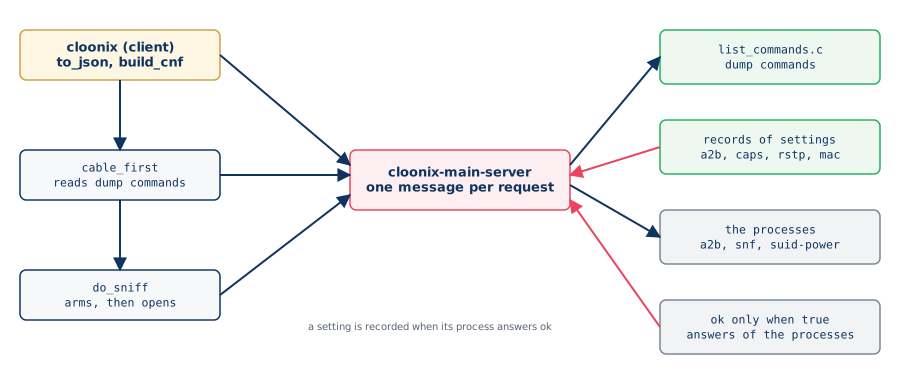
The command line of the user book is written in cloonix/cloonix; what it sends is one json message of json_interface.c per request, the same the canvas sends. This chapter is where each rule of the command line lives.
2.1. cnf: the kind read from the keys
build_cnf() turns cnf <name> [<interface>|A2B|B2A] key=value into one message. No two kinds of object share a key (CNF_KEYS), so the name does not need its kind:
sniff=           snf_add            any interface, any air
x= y=            item_pos           any item of the canvas
angle=           item_poseth        an interface of any item
A2B|B2A ...      a2b_cnf            dir=<0|1> cmd=<name> val=<n>
publish=         nat_cnf            publish=<ports>
cpu= ram=        cnt_cnf            the keys given only
rstp=            lan_cnf            rstp=on|off
mac_mangle=      c2c_cnf            mac_mangle=<mac>
A cap not named keeps its value: cnt_limit() starts from the caps in force (lim_cpu, lim_ram of t_cnt) and overwrites the ones named.
2.2. plug, unplug: the cable read first
cable_first() asks list_commands_req on the connection of the request, answered at once, and reads the lan of the interface in the plug lines (lan_of()); a wlan without a line is on the air of its kind, cntwifi or kvmwifi:
an unplug without a lan gets the lan it is on;
a plug onto the lan it is on answers 0 and says so;
a plug of an eth cabled elsewhere is an unplug then a plug; a plug refused there puts the eth back where it was. A wlan changes air in one move of wifi_air.c.
cable() asks again, every half second within the ack budget, a plug or an unplug refused because the same interface is being cabled or uncabled, or has a plug already waiting for its endpoint.
A message given with rpc is sent as it is, without this reading. cfg_name_is_iface() refuses a lan or an air named eth<i>, wlan<i>, A or B, so the word after a name is read one way only.
2.3. sniff: armed before it opens
cnf <guest> wlan<i> sniff= is sent for the air of that radio, read from dump commands the same way, and says so on stderr.
do_sniff() reads dump commands first: an interface without its cnf <name> <itf> sniff=on line is armed with snf_add before the pcap_open, so a nominal sniff is never refused by the server. A wlan is replaced by its air. The refusal texts of pcap_relay.c stay the fallback of a request from elsewhere.
2.4. dump commands: every setting replayed
list_commands.c writes the adds, the plugs, the sniffs, the settings and the places of the canvas, in an order where each line finds what it needs:
A c2c is written by the net whose local_is_master is set; the far net writes the same line behind a #, so one replay makes one cable.
setting |
recorded in |
|---|---|
nat ports |
ports of t_ovs_nat_main, on the add line |
a2b settings |
cnf_set, cnf_val, cnf_repsrc, cnf_repdst of t_ovs_a2b, on the ok of the a2b process |
cnt caps |
lim_cpu, lim_ram of t_cnt, on the ok of suid_power |
rstp |
rstp of the lan in lan_to_name.c, on the ok of ovs_drv |
mac_mangle |
c2c_chainlan.c, c2c_chainlan_mac_mangle() |
sniff of an item |
its endp_type, sniffed() |
capture of an air |
wifi_air.c, gone with the air |
places |
layout_store.c |
A setting is recorded when the process that holds it answers ok, never on the request: dump commands says what is in force.
2.5. The requests of the canvas
The http threads of cloonix-gui-server never touch doorways. Each request is queued (job_post()) and sent by the main loop (job_rx(), woken by a pipe): the hmac key and digest, the rpc buffers and the tx queues of doorways belong to one thread.
Developer documentation ‹ 1. The ways in › 3. Signalling and data flows